
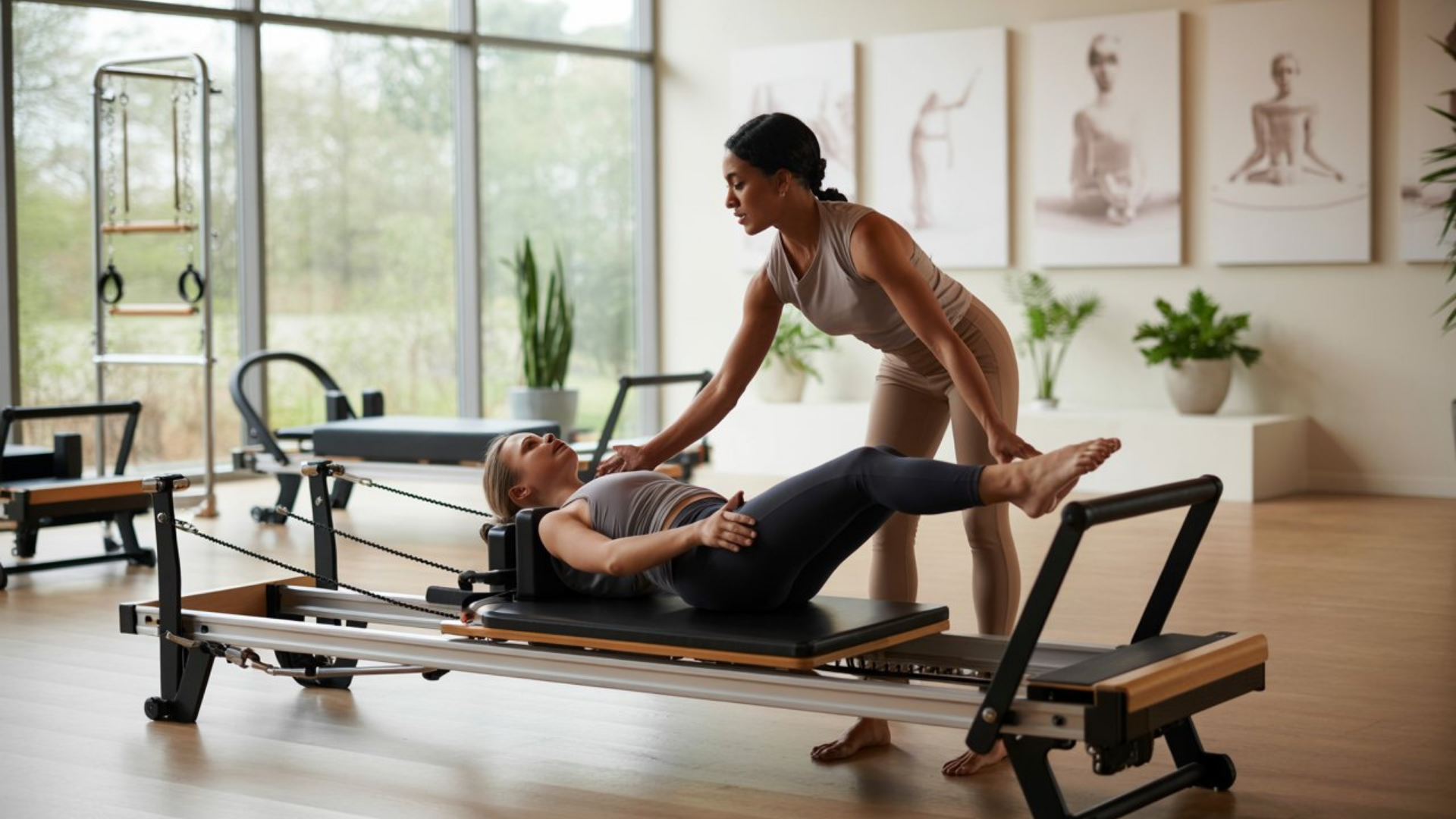
Tot mai multi instructori de Pilates lucreaza cu clienti care folosesc Ozempic, Wegovy sau un alt medicament GLP-1.
Asta schimba mai mult decat greutatea corporala.
Poate schimba apetitul, hidratarea, recuperarea si energia cu care clientul intra in clasa.
Daca predai clase de grup sau sesiuni private, nu trebuie sa devii expert medical.
Dar trebuie sa stii ce semnale sa observi si cum sa adaptezi sesiunea cand un client se misca avand mai putin combustibil.
Ghidul acesta explica ce fac medicamentele GLP-1, ce observa de obicei instructorii prima data si cum poti adapta sesiunile de Pilates fara sa exagerezi.
Mai intai, o limita utila
Instructorii de Pilates nu diagnosticheaza efecte secundare si nu ofera sfaturi medicale.
Nu acesta este rolul tau.
Rolul tau este sa antrenezi persoana din fata ta, in sesiunea de azi.
Asta inseamna sa observi cand energia este scazuta, cand hidratarea pare insuficienta, cand recuperarea arata mai lenta decat de obicei si cand clientul are nevoie de un ritm diferit ca sa se miste bine.
Ce fac de fapt medicamentele GLP-1
Medicamente precum Ozempic, Wegovy si Mounjaro imita un hormon numit GLP-1.
Efectele principale sunt:
- apetit redus
- digestie mai lenta
- glicemie mai stabila
- aport caloric total mai mic
Pentru multi oameni, asta poate duce la scadere semnificativa in greutate fara senzatie constanta de foame.
Dar exista un efect important pe care instructorii ar trebui sa il inteleaga.
Mai putina mancare inseamna mai putin combustibil.
Iar mai putin combustibil schimba felul in care corpul raspunde la efort.
Provocarea in antrenament: scaderea in grasime poate reduce si masa musculara
Cand cineva slabeste repede, corpul rareori pierde doar grasime.
Se pierde si o parte din masa musculara slaba.
Pentru Pilates, asta conteaza deoarece musculatura sustine:
- stabilitatea articulatiilor
- suportul coloanei
- echilibrul si coordonarea
- productia de energie
Cand masa musculara scade, clientii pot simti:
- oboseala mai rapida
- stabilizatori mai slabi
- recuperare mai lenta
- toleranta mai mica la efort
De aceea medicii recomanda tot mai des antrenament de forta in paralel cu tratamentul GLP-1.
Miscarea ajuta la protejarea masei musculare in timpul scaderii in greutate.
Pilates poate avea un rol important aici.
Semnalul pe care instructorii il observa adesea primul
Prima schimbare raportata de instructori nu este greutatea.
Este variatia energiei.
Clientii pot ajunge la clasa spunand:
"Azi ma simt foarte bine."
Sau:
"Saptamana asta sunt cam obosit."
Ambele pot fi adevarate.
Pentru ca apetitul redus duce des la un aport caloric mai mic, nivelul de energie poate fluctua mai mult decat de obicei.
Unii clienti pot avea si greata sau deshidratare in primele luni de tratament.
Aici conteaza atentia instructorului.
Nu orice zi cu energie scazuta inseamna lipsa de motivatie.
Uneori corpul are pur si simplu nevoie de alt ritm.
Idee strategica
Clientii care folosesc medicamente GLP-1 nu au nevoie de mai putina miscare.
Au nevoie de miscare mai bine structurata, care protejeaza masa musculara, sustine energia si construieste obiceiuri sustenabile.
Cum poti adapta sesiunile de Pilates
Majoritatea schimbarilor sunt subtile.
Nu ai nevoie de un program complet diferit.
Dar cateva ajustari ajuta mult.
1. Protejeaza lucrul de forta
Mentinerea masei musculare ar trebui sa devina o prioritate.
Asta inseamna sa pastrezi exercitii care solicita:
- fesierii
- spatele
- stabilizatorii trunchiului
- tractiuni si impingeri pentru partea superioara a corpului
Rezistenta reformerului, arcurile si tempo-ul controlat functioneaza foarte bine aici.
Gandeste-te la footwork cu incarcare, variatii de bridge, rowing, press-uri si alte miscari in care clientul lucreaza impotriva unei rezistente reale.
Scopul nu este epuizarea.
Scopul este stimul muscular consecvent.
2. Ajusteaza ritmul cand energia scade
Clientii pe GLP-1 pot avea nevoie de pauze putin mai lungi intre secvente.
Semne ca merita sa incetinesti ritmul:
- oboseala neobisnuita
- ameteala
- dificultate in a termina seriile
- stabilizatori tremurati
Pauzele scurte intre blocuri pot schimba mult calitatea sesiunii.
Intr-o zi cu energie scazuta, poate fi mai inteligent sa lucrezi blocuri mai scurte, sa resetezi mai des si sa eviti secvente lungi continue care se transforma in repetari neglijente.
Calitatea miscarii conteaza intotdeauna mai mult decat volumul.
3. Incurajeaza hidratarea
Apetitul redus poate reduce si semnalele de sete.
Deshidratarea poate aparea ca:
- dureri de cap
- senzatie de lesin
- crampe musculare
Incurajarea clientilor sa aduca apa si sa bea regulat in timpul sesiunii poate preveni multe probleme.
Daca cineva ajunge in graba, nemancat si deja ametit, acesta este un semnal de coaching.
De obicei este un motiv sa adaptezi sesiunea, nu sa impingi mai tare.
4. Fii atent la recuperare
Daca un client spune ca febra musculara tine cateva zile, corpul lui poate sa nu se recupereze complet.
Asta poate semnala:
- aport redus de proteine
- calorii insuficiente
- volum de antrenament prea mare
Reducerea temporara a intensitatii si focusul pe forta controlata pot ajuta la restabilirea echilibrului.
Aici sesiunile private pot fi foarte utile. Un client care pare in regula intr-o clasa aglomerata poate avea totusi nevoie de o progresie mai masurata timp de cateva saptamani.
Partea emotionala pe care multi instructori o rateaza
Scaderea rapida in greutate poate aduce si schimbari psihologice.
Clientii pot simti:
- nesiguranta fata de noul corp
- anxietate legata de mentinerea rezultatelor
- vinovatie pentru ca folosesc medicatie
- atentie neasteptata din partea altora
Instructorii nu trebuie sa joace rolul de terapeuti.
Dar tonul conteaza.
Concentrarea pe forta, capacitate si calitatea miscarii, nu pe aspect, pastreaza mediul de studio sustinator.
In loc de:
"Ai slabit foarte mult."
Incearca:
"Stabilitatea si controlul tau s-au imbunatatit mult."
Asa construiesti identitate prin miscare, nu prin greutate.
Intrebari simple pe care le pot pune instructorii
Un check-in scurt inainte de clasa poate preveni probleme mai tarziu.
Exemple:
- "Cum a fost energia ta saptamana asta?"
- "Ai apucat sa mananci sau sa te hidratezi inainte de clasa?"
- "Exista efecte secundare despre care ar trebui sa stiu azi?"
Intrebarile acestea normalizeaza conversatia fara sa puna clientul intr-o pozitie inconfortabila.
Semnale de alarma de urmarit
Majoritatea clientilor se pot antrena normal in timp ce folosesc medicamente GLP-1.
Dar cateva semnale ar trebui sa duca la ajustari.
Urmareste:
- ameteala frecventa in timpul clasei
- scadere dramatica a fortei
- oboseala persistenta
- instabilitate vizibila in miscari de baza
Daca aceste semnale apar des, incurajeaza clientul sa discute despre antrenament si nutritie cu medicul sau specialistul care il urmareste.
De ce studiourile ar trebui sa fie atente la trendul acesta
Medicamentele GLP-1 se raspandesc rapid.
Asta inseamna ca tot mai multi clienti vor ajunge in studio folosindu-le deja.
Studiourile care gestioneaza bine situatia castiga cateva avantaje:
- un mediu de antrenament mai sigur
- mai multa incredere din partea clientilor
- retentie mai buna pe termen lung
Obiectivul nu este doar scaderea in greutate.
Este sa ajuti oamenii sa construiasca un corp mai puternic in timp ce corpul lor se schimba.
Studiourile care fac asta bine au de obicei trei practici:
- fac un briefing cu instructorii despre semnalele de urmarit
- normalizeaza check-in-urile scurte inainte de clasa
- pastreaza notitele de coaching consecvente in echipa
Conteaza pentru ca energia, apetitul si recuperarea unui client pot varia de la o saptamana la alta.
Cu cat coachingul este mai consecvent, cu atat experienta se simte mai sigura si mai sustinatoare.
Sustine coaching mai bun in tot studioul
Foloseste Mojo ca sa pastrezi notitele instructorilor, rezervarile si contextul clientilor intr-un singur loc, astfel incat coachingul sa ramana consecvent cand nevoile clientilor se schimba.
Testează gratuitIdeea principala
Medicamentele GLP-1 schimba felul in care multi oameni abordeaza scaderea in greutate.
Dar nu inlocuiesc miscarea.
Fac miscarea inteligenta si mai importanta.
Pentru instructorii de Pilates, directia este clara:
Concentreaza-te pe forta, ritm, hidratare si coaching sustinator.
Combinatia aceasta protejeaza masa musculara, imbunatateste increderea si ajuta clientii sa construiasca obiceiuri care dureaza mai mult decat orice medicament.
Pentru studiouri, oportunitatea este mai mare decat un trend.
Este sansa de a construi un standard de coaching care ii ajuta pe clienti sa se simta in siguranta, intelesi si bine ghidati atunci cand corpul lor se schimba.
Asta ii face pe oameni sa revina.